Guide prepared by the Transuisse Editorial Team. Since 1997, we have been supporting freight forwarders and companies in managing shipments between Italy and Switzerland, handling transport, freight consolidation and customs procedures on the cross-border route every day. Transuisse is an Authorized Economic Operator (AEO) No. 14 0937.
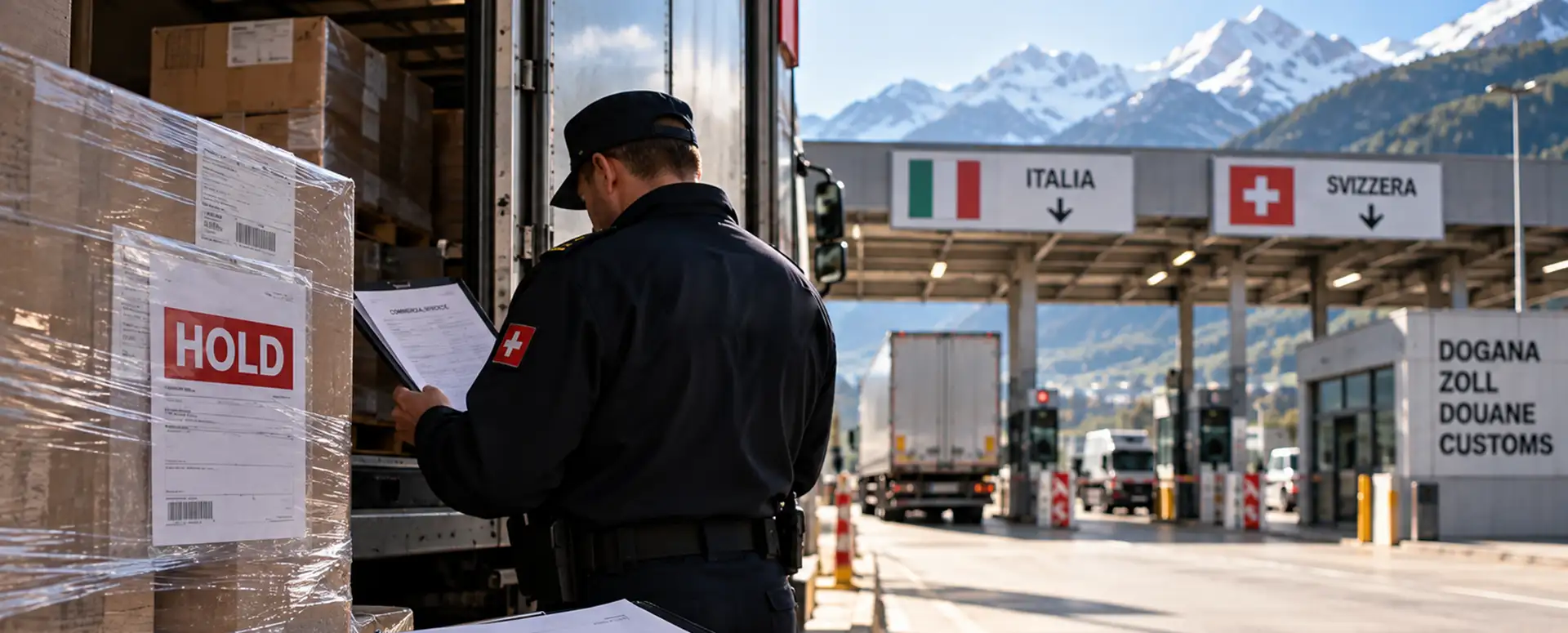
When a shipment is held at customs, the first thing to do is identify the type of hold, rather than trying to estimate how long it will take to resolve it. A documentary hold can typically be resolved within hours; a hold caused by a physical inspection, missing payment or reclassification of the goods may take several days and needs to be managed differently from the outset.
If you are responsible for responding to the customer while the goods are still being held, knowing which questions to ask your customs contact, and in what order, can make the difference between timely communication and waiting without information.
In this guide, we will look at:
- how to distinguish between the different types of customs holds and what they involve;
- what to do during the first few hours after the goods are reported as being held;
- which costs accumulate while goods are held, and who bears them;
- how to prevent the same hold from occurring on the next shipment;
- when it makes sense to involve an external partner to resolve the issue.
Types of Customs Holds on the Italy-Switzerland Route and What They Involve
Not all customs holds are the same, and the cause determines both the time required for resolution and who needs to intervene first.
1. Documentary Hold: Missing or Inconsistent Information
A documentary hold occurs when information is missing or inconsistent between the commercial invoice, transport document and customs declaration. It is generally the quickest type of hold to resolve: once the missing information has been provided or the incorrect information corrected, the customs procedure can resume.
We discussed this in detail in “Exporting to Switzerland: Essential Documents to Avoid Customs Holds”.
2. Hold Due to a Physical Inspection Ordered by Customs
A physical inspection involves opening the vehicle and directly checking the goods. The timeframe cannot be predicted precisely because it depends on the workload of the customs office at the time of the inspection.
In this case, there is nothing to correct in the documentation: the procedure simply requires waiting for the outcome of the inspection while remaining available for any clarification requested on site.
3. Hold Due to Non-Payment of Import Duties or VAT
When the hold is caused by unpaid Swiss duties or VAT, the goods cannot continue their journey until the payment has been made, regardless of how correct the rest of the documentation may be.
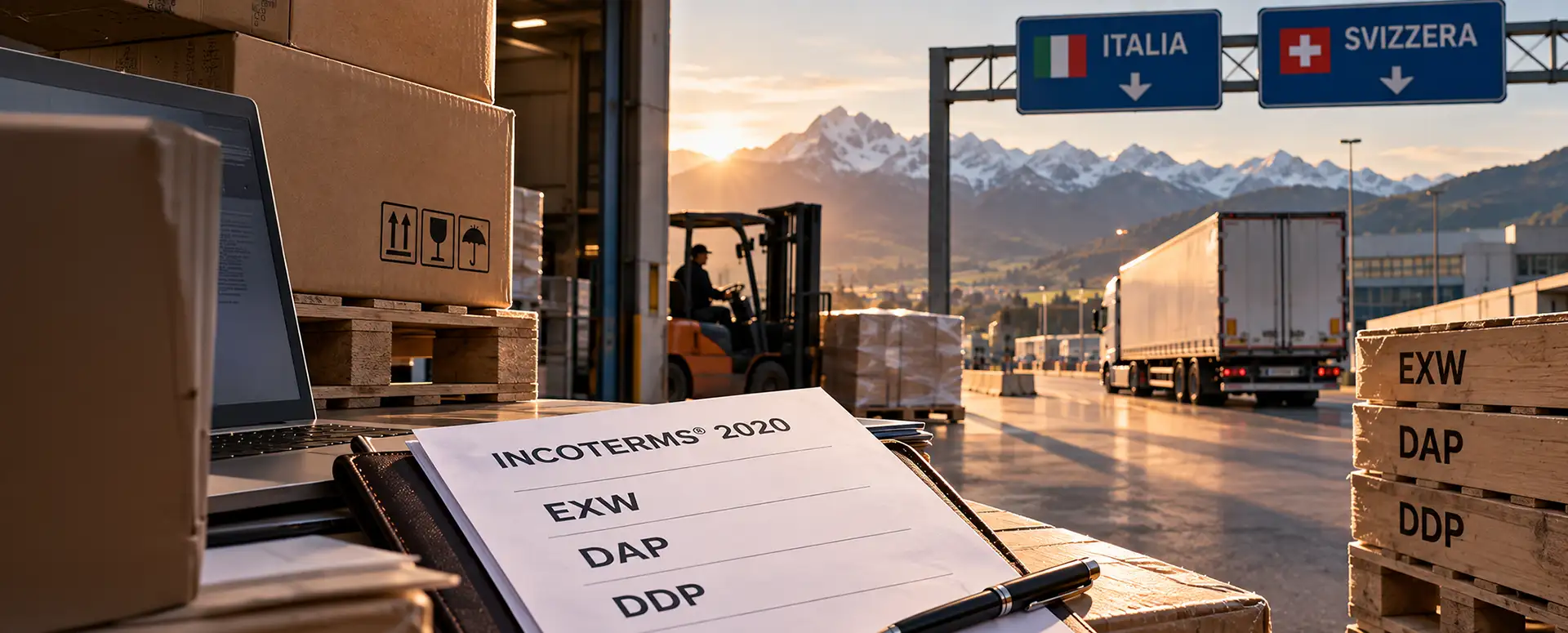
Who is responsible for making this payment depends on the agreed delivery term: under DAP and EXW, it is typically the Swiss buyer; under DDP, it is the Italian seller.
4. Hold Due to an Incorrect Customs Code or Reclassification of the Goods
When Swiss customs challenges the declared customs code, it may reclassify the goods, changing the amount of duties due and consequently requiring an additional payment before customs clearance can be completed.
This type of hold often requires direct communication between the customs declarant and the customs office to clarify the correct tariff classification.
5. Hold Due to a T1/T2 Transit Document Not Being Closed on Time
A transit document has a specific period of validity within which the goods must be presented to the customs office of destination.
The party that opened the transit document remains responsible for the duties if the procedure is not properly discharged within the required timeframe.
A delay in closing the transit procedure, even if unintentional, can therefore turn into a hold with direct financial implications for the party that issued the document.
What to Do During the First Few Hours After the Goods Are Reported as Being Held
The order in which you address these steps has a greater impact on the overall resolution time than the speed with which you carry out each individual step.
- Identify the exact cause of the hold through your customs contact, without making assumptions. Ask for the precise reason communicated by customs, rather than a generic description such as “customs issue”.
- Immediately collect the requested documents or information. If information is missing from the invoice or transport document, prepare the correction before contacting the customs office again, not afterwards.
- Check whether an immediate payment of duties or VAT is required to release the shipment, and who is responsible for making it according to the agreed delivery term.
- Give the customer a realistic timeframe based on the type of hold identified, rather than providing generic reassurance: a documentary hold and a physical inspection have very different resolution times.
- If the shipment is part of a consolidated load, check whether the hold concerns the entire vehicle or only the individual shipment, so that the other customers involved can also be informed correctly.
Which Costs Accumulate While Goods Are Held, and Who Bears Them?
A customs hold typically generates storage or detention costs for the period during which the goods remain in the customs area, as well as the risk of financial penalties if the hold is caused by a documentary irregularity that is not resolved promptly.
There is also the indirect cost of the delivery delay, which affects the relationship with the end customer even before it affects the financial balance of the shipment.
Who bears these costs depends partly on the delivery term agreed between seller and buyer: under DDP, the economic risk of an import hold falls mainly on the Italian seller, while under DAP and EXW it falls more directly on the Swiss buyer.
We discussed this in detail in “DDP, DAP, EXW: What Really Changes in Italy-Switzerland Shipments”.
How to Prevent the Same Hold from Occurring on the Next Shipment
Every customs hold that has been resolved deserves a follow-up review: which variable caused it, and does it fall within one of the recurring errors on the Italy-Switzerland route?
If the hold was caused by an incomplete invoice, an inaccurate customs code or an EUR.1 document that was not validated on time, the preventive measures for the next shipment are already described in “Italy-Switzerland Customs: The 7 Mistakes That Slow Down Shipments (and How to Avoid Them)”.
An isolated hold that has been understood and resolved is rarely repeated. It is the same errors, when not corrected at the root, that generate recurring holds on subsequent shipments.
The difference between the two scenarios almost always lies in whether time was taken after the resolution to understand the exact cause, rather than simply releasing the shipment and moving on.
When Does It Make Sense to Involve an External Partner to Resolve the Issue?
Involving a partner with in-house customs management makes particular sense when the hold requires direct communication with the customs office regarding a reclassification or a complex irregularity, and your current contact does not have a direct channel to handle it quickly.
A partner that manages customs internally, rather than just transport, can intervene directly in the customs procedure instead of simply requesting updates from a third party.
It is also worth involving an external partner when the same type of hold has already occurred several times. At that point, the issue is no longer the individual shipment, but a customs management process that is not identifying the problem before the vehicle departs.
This is the same principle described in “Direct Carrier or Freight Forwarder? What Really Changes on the Italy-Switzerland Route”: the difference becomes clear when something does not go as planned, not when everything runs smoothly.
Transuisse, Your Partner When Goods Are Held at Customs
Since 1997, Transuisse has managed the customs procedures for Italy-Switzerland shipments internally, including situations in which something does not go as planned.
A single contact person follows the shipment from departure to delivery and can be reached to intervene directly in the event of a customs hold, without first having to check with a third party.
We are a family-run company, with direct responsibility for every stage we coordinate.
We operate as an Authorized Economic Operator (AEO) No. 14 0937, a certification confirming compliance with specific requirements concerning reliability and customs compliance.
We also monitor developments in Swiss customs regulations, including the transition to the new Passar system, in order to reduce the risk of holds related to the transition between the two declaration systems.
Frequently Asked Questions About Customs Holds on the Italy-Switzerland Route
It depends on the type of hold. A documentary irregularity can typically be resolved within hours once the information has been corrected.
A physical inspection or reclassification of the goods may take several days because it depends on checks ordered by Swiss customs and on the workload of the customs office.
They generally fall on the party responsible for the stage in which the hold occurred.
If the hold concerns import customs clearance, the cost depends on the agreed delivery term: under DDP it falls on the seller, while under DAP or EXW it falls on the buyer.
Immediately verify who is responsible for the payment under the agreed delivery term, and make the payment or request it from the responsible party without delay.
The goods cannot continue their journey until the payment has been registered by Swiss customs.
Yes, if the underlying cause of the hold is not properly addressed.
An isolated hold that is understood and resolved is rarely repeated. A documentary or organizational error that is not corrected, however, tends to generate recurring holds on subsequent shipments.
A Well-Managed Customs Hold Becomes an Exception, Not a Habit
The difference between an isolated incident and a recurring problem is determined in the days following the resolution of the hold, rather than during the hold itself.
This article concludes the second Transuisse content cluster dedicated to Italy-Switzerland customs.
If you need to review a specific point, the articles are linked together: from the most common mistakes and essential documents to actual customs clearance times and the choice of the most suitable delivery term.
If you currently have a shipment held at customs, or would like to assess with us how to reduce the risk of it happening again, our team can intervene directly in your case.
Discover the Transuisse customs management service or contact us for an introductory call.